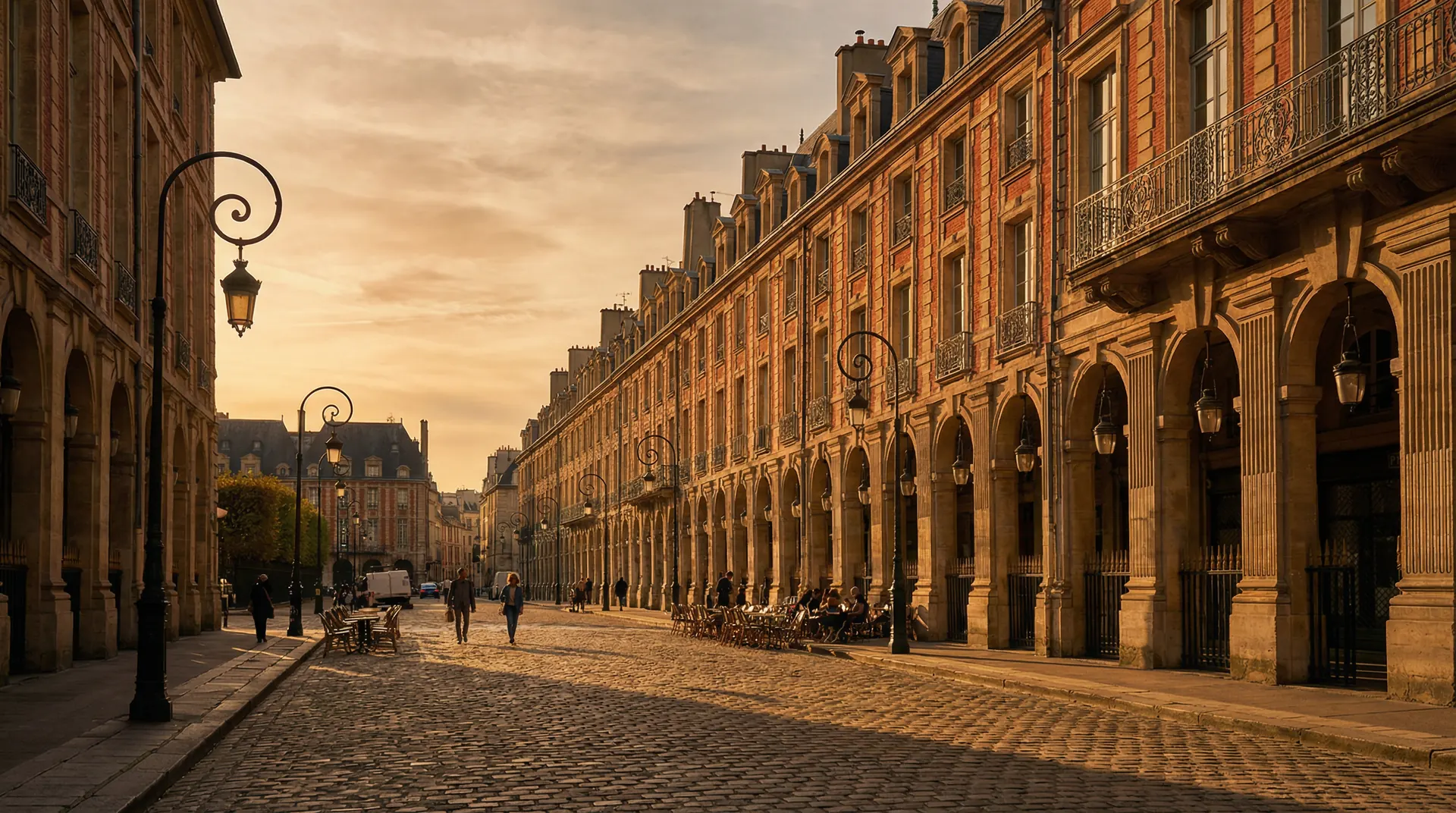
Illustration: arcades and old Paris façades at golden hour
All routes
Verified route · 16 October 2026 Our pick

From Bastille to Canal Saint-MartinHistory, Architecture & Photography

A half-day from Bastille to the canal, through the arcades and streets of the Marais.

4.0 km
Distance
53 min
Walking
≈ 3 h 53
Total time
7
Stops
Easy
Difficulty

About this walk

This half-day walk links "the order of old Paris" with "the cinematic everyday life of eastern Paris": it starts from the revolutionary memories of Bastille, then the royal square and its arcades, the buzz and street details of the Jewish quarter, the town mansions and the former Templar estate, all the way to the cast-iron footbridges, reflections and atmosphere of the Canal Saint-Martin. For photographers, a composition-friendly route: symmetry, leading lines, textures and street corners that look like film stills.

Who is it for? For photography lovers, urban-culture explorers and slow strollers.

Highlights

  1. 01

    From the symmetrical arcades of Place des Vosges to the canal footbridges: cinematic framing all the way.

  2. 02

    The Pletzl, with its shops, stickers and old walls, for street documentary.

  3. 03

    Falafel on Rue des Rosiers, then a break in a canal-side café.

The walk, stop by stop

Start · Bastille metro station (lines 1, 5 and 8).

When to go · An afternoon from Wednesday to Friday, or on Sunday (Victor Hugo's House closes on Mondays, the Archives museum on Tuesdays; avoid Saturdays for falafel). In winter, set off before 13:30 to enjoy Square du Temple before it closes at 17:45.

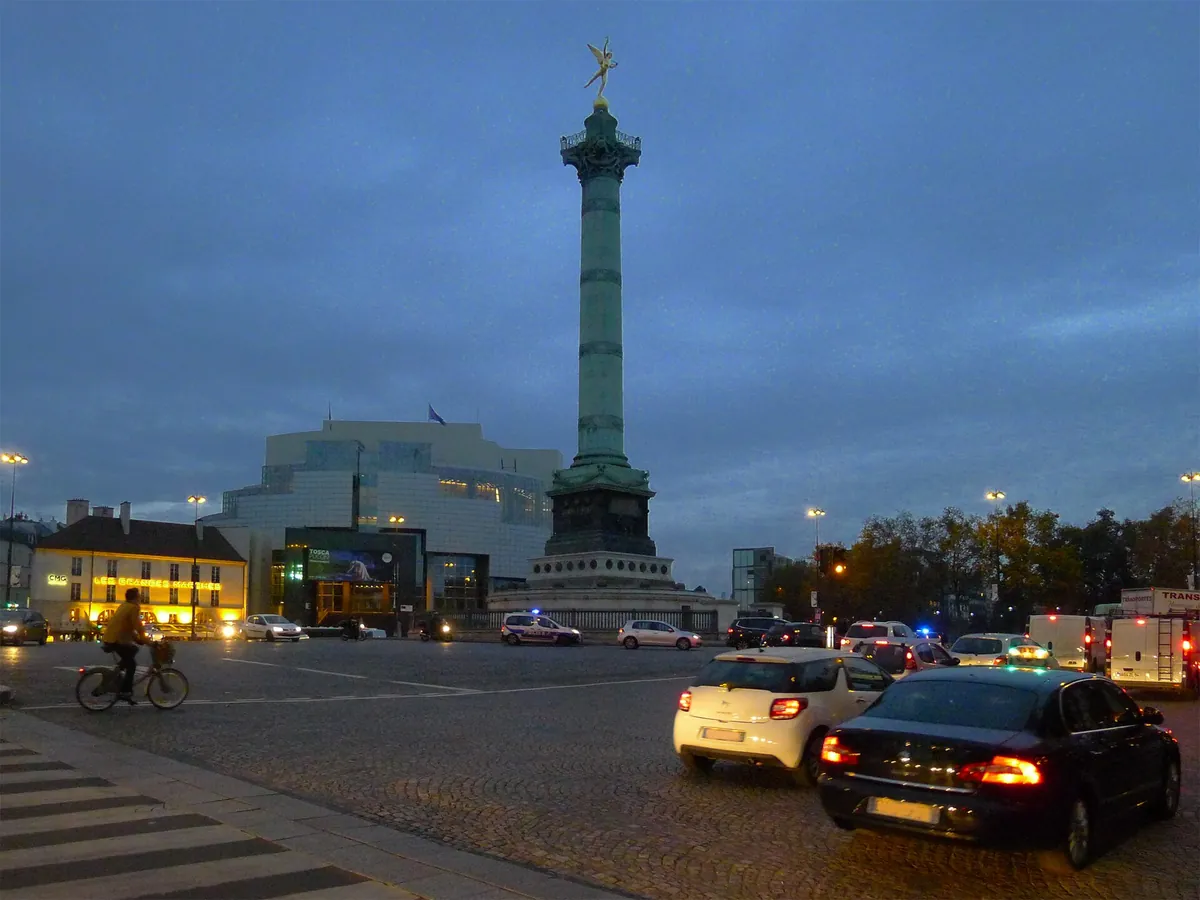
  1. The July Column and the Opéra Bastille at dusk
    Mbzt · CC BY-SA 4.0
    StartSquare+0 min · 20 min on site

    Place de la Bastille

    Place de la Bastille, 75004 / 75011 / 75012 Paris

    The Bastille fortress-prison, stormed on 14 July 1789, stood right here. Today the square brings together the July Column and the Opéra Bastille, a striking contrast between two eras.

    What to see · The fortress site, the July Column (commemorating 1830) and the Opéra Bastille: three eras on one square.

    Did you know?

    • The July Column (1835–1840) does not celebrate 1789: it commemorates the July Revolution of 1830, the "Three Glorious Days".
    • The Opéra Bastille, designed by Carlos Ott, was inaugurated on 13 July 1989 on the site of the former Bastille railway station; its first opera performance only took place in March 1990.
    • Demolished after the Revolution by the contractor Palloy, the fortress left almost nothing behind; some of its stones went into the Pont de la Concorde (then the Pont Louis-XVI).
    • A remnant you can see: on the Line 5 platform of Bastille metro station (towards Bobigny), a section of the fortress moat's counterscarp wall is exposed.
    • Where Rue Saint-Antoine meets the square, part of the fortress outline is marked on the ground.

    Photo and visit tips

    • At blue hour, car light trails around the column are perfect for long exposures; in daytime, focus on architectural lines and the movement of the crowd.
    • From the Opéra side, a wide-angle lens fits the modern geometry and the column into a single frame.

    Practical

    • Bastille metro station (lines 1, 5 and 8).
    • Free public toilets: 14 place de la Bastille (6:00–22:00) and 2 boulevard Richard-Lenoir (24/7).
    8 min · 600 m — walk to the next stop
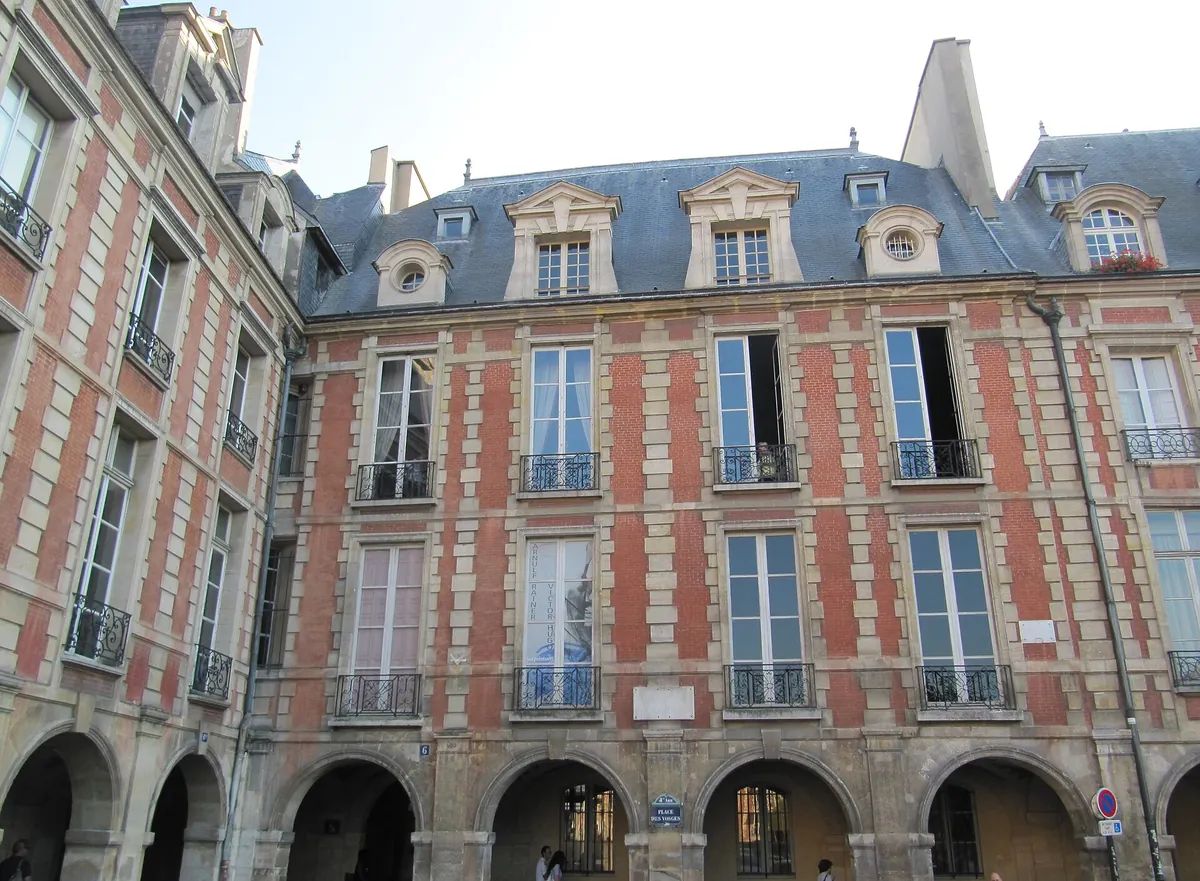
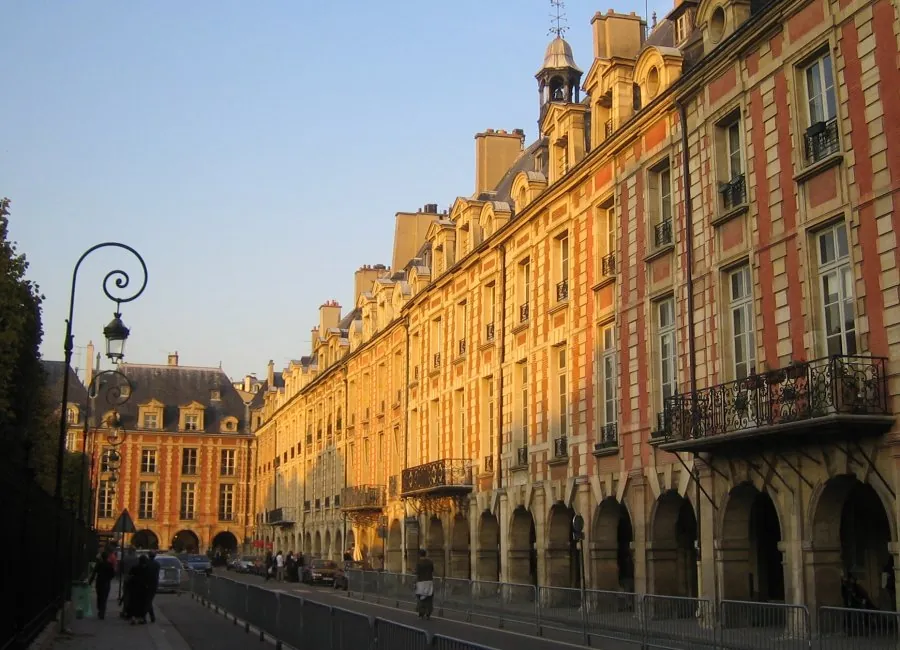
  2. Brick façades and arcades of Place des Vosges in evening light
    Thbz · CC BY-SA 2.5
    Stop 2Square+28 min · 25 min on site

    Place des Vosges

    Place des Vosges, 75003 / 75004 Paris

    Built between 1605 and 1612, it is one of the first planned royal squares in Paris: red-brick and stone façades, continuous arcades and a square garden in the middle, in perfect symmetry.

    What to see · Walk around under the arcades: symmetry, red brick and the central garden.

    Did you know?

    • It was first called Place Royale. The name "Place des Vosges" appeared in 1800, honouring the first département to pay its taxes; the square went back to Place Royale in 1814–1848 and 1852–1870, and took its present name for good in 1870.

    Photo and visit tips

    • The arcades shelter you from the rain, so you can keep shooting in bad weather, and people taking cover there make for natural, candid scenes.
    • Overcast skies bring out the texture of brick and stone; after rain, reflections on the wet ground make great foregrounds.
    • Stand on the axis of an arcade gallery: the pillars become leading lines for silhouettes of passers-by.

    Practical

    • Free public toilets in the square's garden (1 place des Vosges), during the garden's opening hours.
    • Metro Chemin Vert (line 8), Saint-Paul (line 1) or Bastille (lines 1, 5, 8).
    2 min · 170 m — walk to the next stop
  3. Façade of Victor Hugo's House on Place des Vosges
    Staroad.fr · CC BY-SA 4.0
    Stop 3Museum+55 min · 20 min on site

    Maison de Victor Hugo (Victor Hugo's House)

    6 place des Vosges, 75004 Paris

    The apartment at 6 Place des Vosges where Victor Hugo lived for sixteen years, from 1832 to 1848, now a City of Paris museum.

    What to see · At no. 6 on the square, Victor Hugo's apartment (1832–1848).

    Did you know?

    • When Hugo moved in, in October 1832, the square was still called Place Royale.

    Photo and visit tips

    • Even without visiting the museum, the façade and the rhythm of the arcades are worth a stop: frame the entrance through an arch, with passers-by.

    Practical

    • Open 10:00–18:00, closed on Mondays and on 1 January, 1 May and 25 December.
    • During the exhibition "Hugo et l'architecture" (until 22 November 2026 according to the official website, which also mentions 13 December), admission to the whole museum is paid: check prices and dates on the official website.
    11 min · 800 m — walk to the next stop
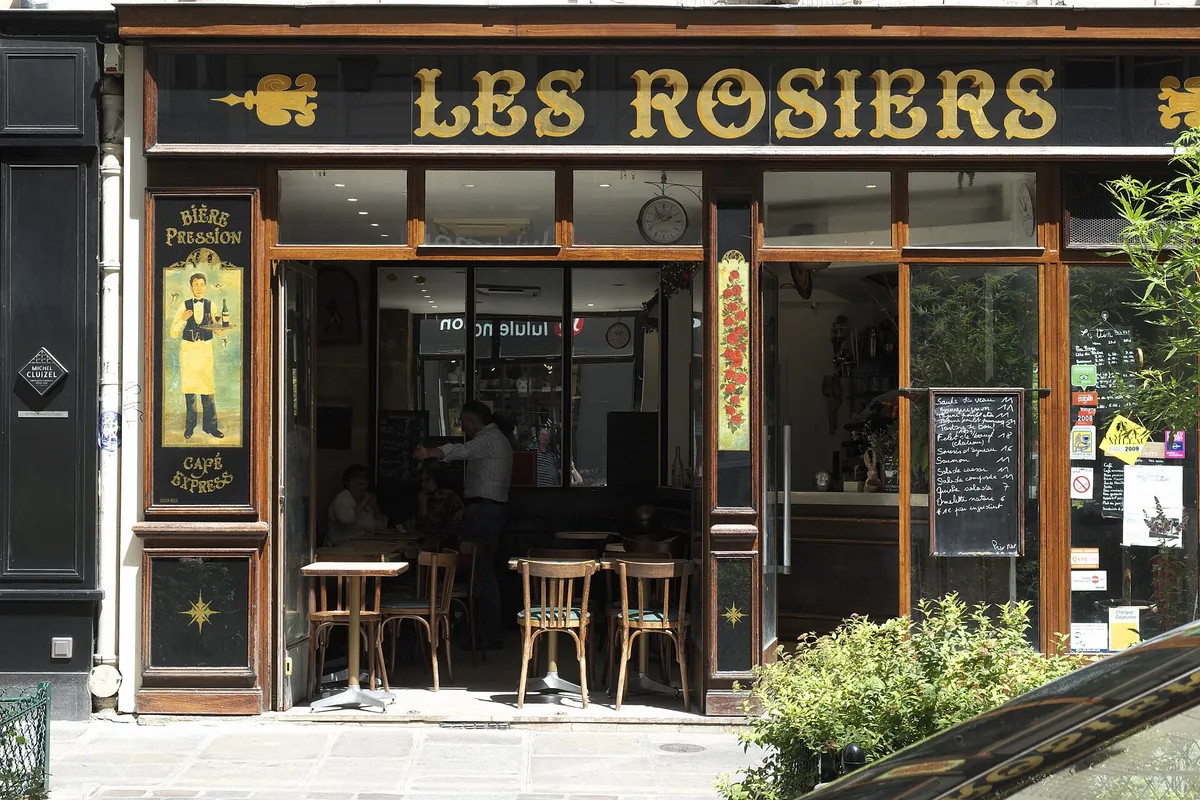
  4. Shopfront of the café Les Rosiers on Rue des Rosiers
    GFreihalter · CC BY-SA 3.0
    Stop 4Street+1 h 26 · 30 min on site

    Rue des Rosiers (the Pletzl)

    Rue des Rosiers, 75004 Paris

    The main street of the Pletzl, the Marais's Jewish quarter: old Jewish shops, bookshops, fashion boutiques that moved in from the 1980s, stickers and old walls, ideal for street documentary.

    What to see · The heart of the Pletzl: shops, street details and a falafel break.

    Did you know?

    • The Jewish shops still observe Shabbat: they close from Friday evening through Saturday and on Jewish holidays, but open on Sunday. Since 2006 the street has been pedestrianised on Sundays.

    Photo and visit tips

    • Respect the privacy of shopkeepers and passers-by; when shooting stickers or doorbells up close, don't block the pavement.
    • Look for "micro-exhibitions" where street signs, shop shutters and old walls meet: shoot the setting first, then the details, for a coherent series.

    Taste

    Falafel in pita, for instance at L'As du Fallafel (34 rue des Rosiers), closed on Saturdays.

    Practical

    • For falafel, avoid Saturdays: most Jewish snack bars, including L'As du Fallafel, close from the end of the day on Friday.
    • Free public toilets at 10 bis rue de Moussy (24/7, about 240 m away).
    6 min · 480 m — walk to the next stop
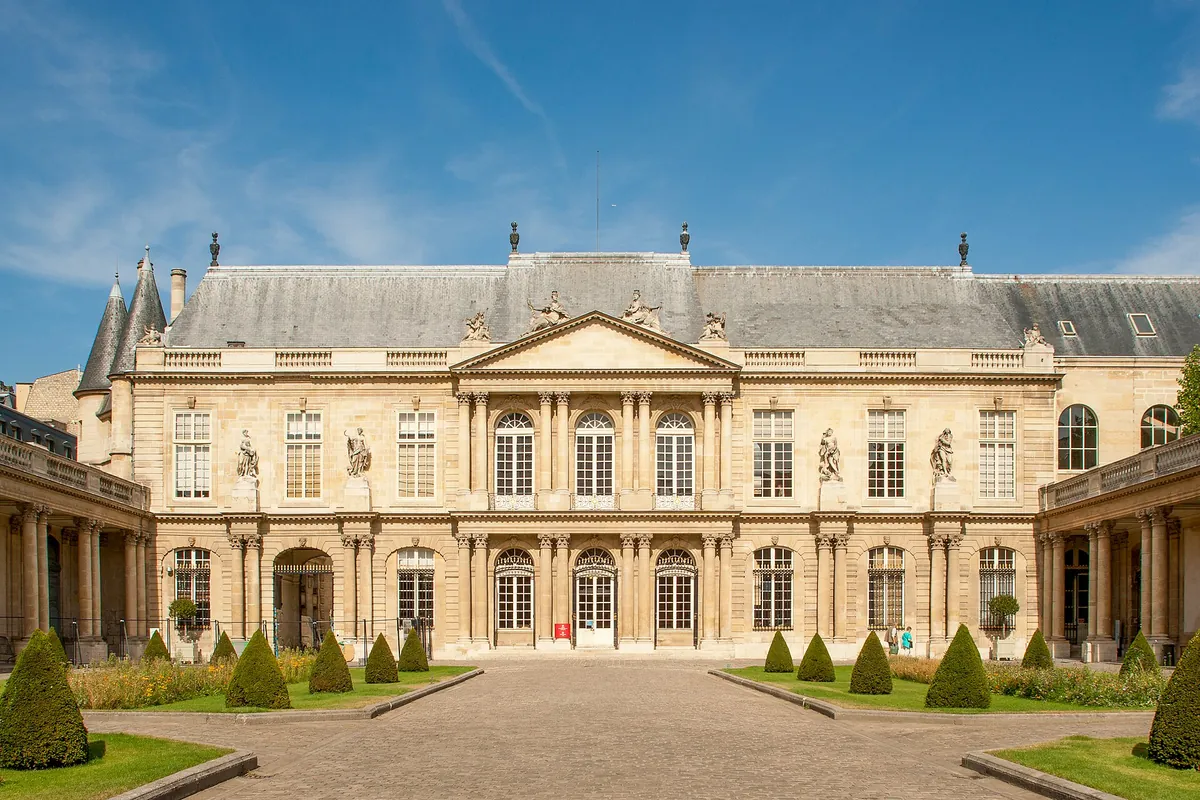
  5. The façade of the Hôtel de Soubise seen from the courtyard
    Ludovic Péron · CC BY-SA 3.0
    Stop 5Museum+2 h 02 · 25 min on site

    Hôtel de Soubise (National Archives Museum)

    60 rue des Francs-Bourgeois, 75003 Paris

    A town mansion rebuilt in 1705–1709 by Pierre-Alexis Delamair, with Rococo interiors by Germain Boffrand. It houses the National Archives Museum.

    What to see · The mansion's façade and decor; free museum, closed on Tuesdays.

    Did you know?

    • In 1808 Napoleon assigned the mansion to the Imperial Archives: a private residence became the home of public memory.

    Photo and visit tips

    • A telephoto lens (70–200 mm) isolates carvings, ironwork and stone textures; from the opposite pavement it compresses the perspective between the carved decor and a passer-by.

    Practical

    • Museum closed on Tuesdays. Monday, Wednesday, Thursday and Friday 10:00–17:30; Saturday and Sunday 14:00–17:30 (until 19:00 during major exhibitions).
    • Free admission: princely apartments, permanent display and exhibitions.
    • Free public toilets at 2 rue des Quatre-Fils (6:00–22:00, about 220 m away).
    9 min · 710 m — walk to the next stop
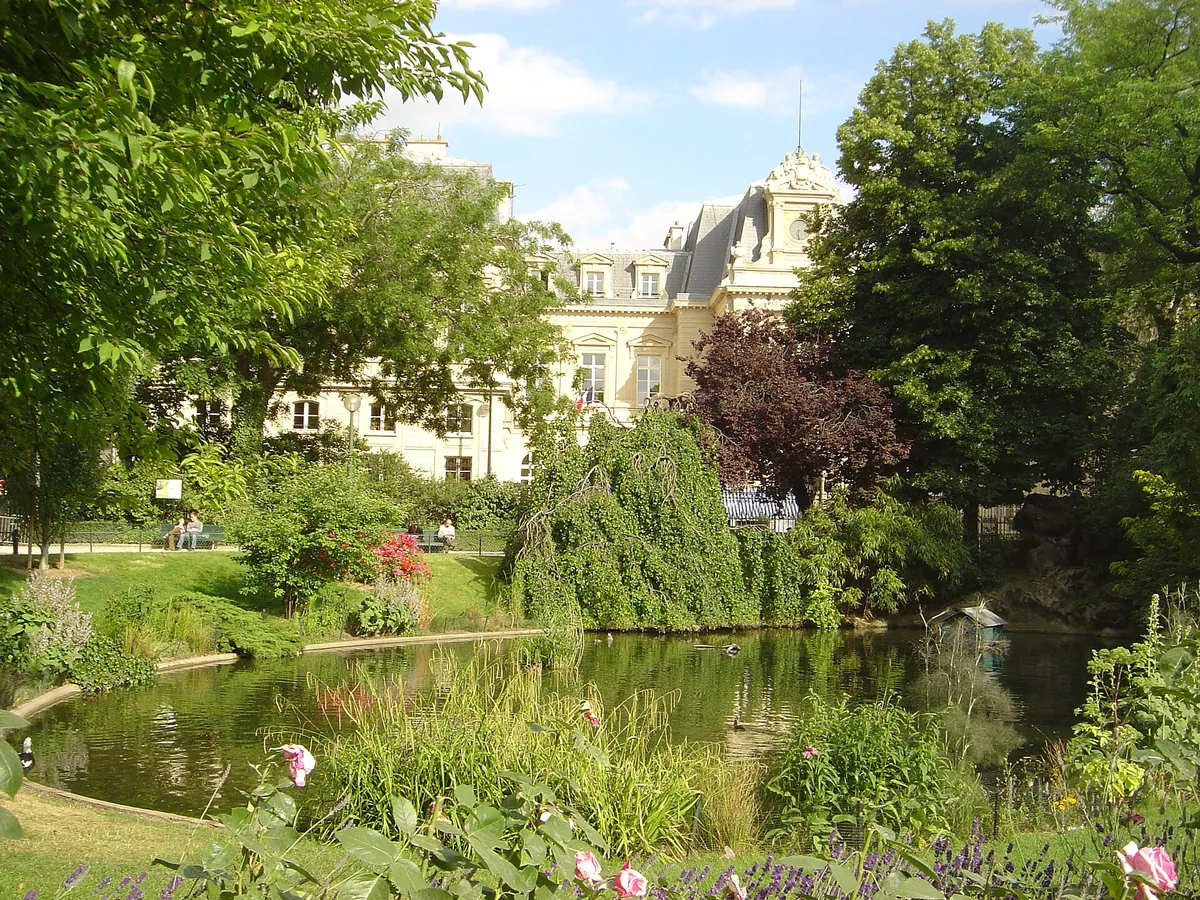
  6. The pond and greenery of Square du Temple
    David.Monniaux · CC BY-SA 3.0
    Stop 6Garden+2 h 36 · 20 min on site

    Square du Temple – Elie-Wiesel

    64 rue de Bretagne, 75003 Paris

    A quiet garden laid out in 1857 by Alphand on the former Paris enclosure of the Knights Templar; it has also borne Elie Wiesel's name since 2017.

    What to see · A quiet break on the former Templar estate; look for the tower's outline in Rue Eugène-Spuller.

    Did you know?

    • The Temple tower, built from 1240, served as a prison for Louis XVI and his family from 1792. Napoleon had it demolished from 1808 so that it would not become a royalist pilgrimage site.
    • The tower stood not in the garden but at the north corner of today's 3rd-arrondissement town hall: its outline is drawn on the ground in Rue Eugène-Spuller.

    Photo and visit tips

    • After the busy streets, play on the contrast of calm: tree shadows, people sitting still on benches; a tree trunk in the foreground adds depth.

    Practical

    • In winter (late October to end of February) the garden closes at 17:45; in summer it stays open until 21:30.
    • Free public toilets inside the garden (50 rue de Bretagne), during opening hours; another one at 158 rue du Temple (6:00–22:00).
    17 min · 1250 m — walk to the next stop
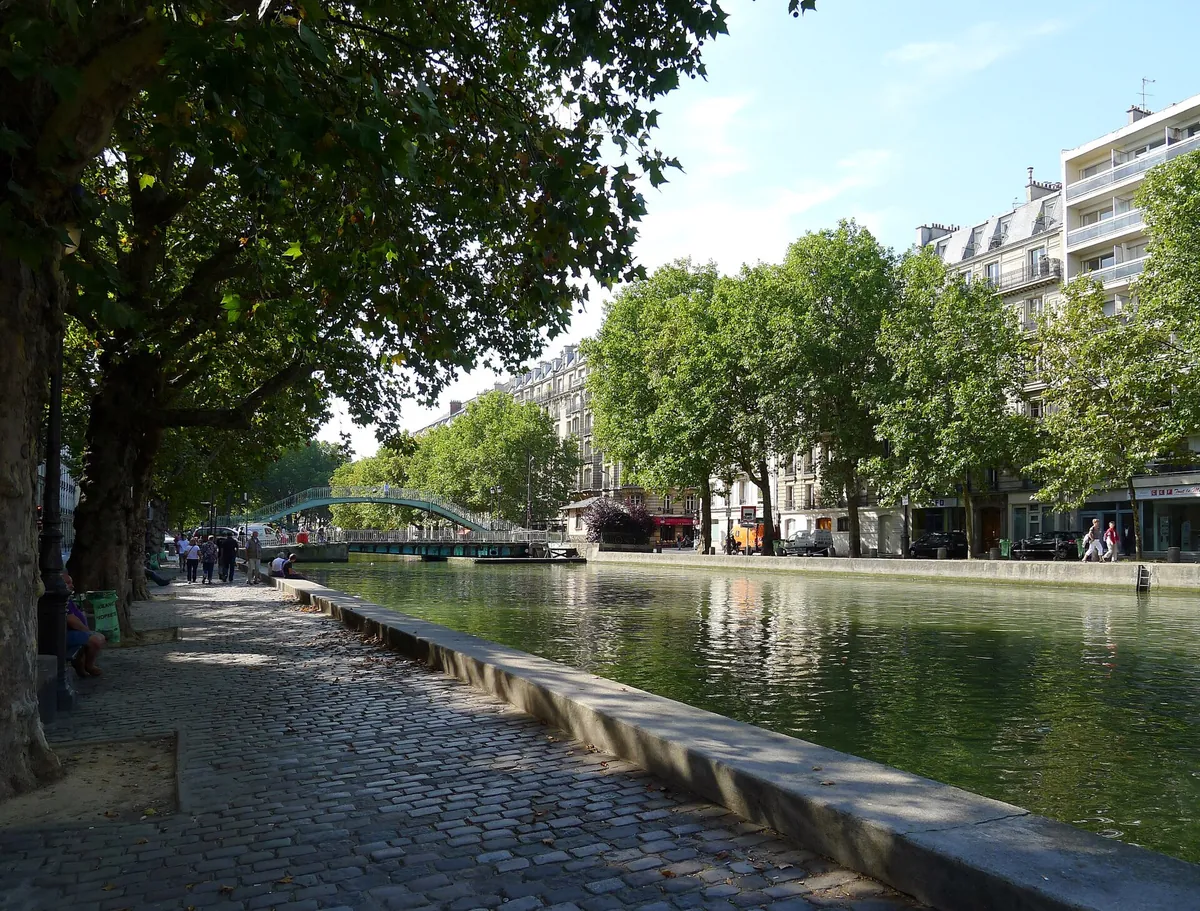
  7. The Canal Saint-Martin between Quai de Jemmapes and Quai de Valmy
    Mbzt · CC BY 3.0
    FinishWaterfront+3 h 13 · 40 min on site

    Quai de Jemmapes (Canal Saint-Martin)

    102 quai de Jemmapes, 75010 Paris

    One of the most cinematic stretches of the Canal Saint-Martin: cast-iron footbridges, railings, locks, stone steps and reflections, by the Hôtel du Nord.

    What to see · The Hôtel du Nord, the Arletty footbridge and the locks: end the walk along the water.

    Did you know?

    • The canal's six cast-iron footbridges were built between 1860 and 1890.
    • At no. 102, the Hôtel du Nord inspired Eugène Dabit's novel and then Marcel Carné's 1938 film, which was actually shot in a studio in Billancourt, where the hotel and footbridge were rebuilt as sets.
    • The nearby footbridge, formerly the Passerelle de la Grange-aux-Belles, is now named after Arletty, unforgettable as Raymonde in the film with her line "Atmosphère ! Atmosphère !". For the canal's 200th anniversary in 2025, nine actresses gave their names to its footbridges and bridges.
    • "Le Clan des Siciliens" (1969) was filmed at 64 Quai de Jemmapes, and the Canal Saint-Martin is where Amélie Poulain skips stones.

    Photo and visit tips

    • An overcast sky gives a film-like look; in bright sun, a polarising filter tames reflections on the water.
    • Walk parallel to the quay for a tracking-shot feel: the railing lines lead the eye to a figure or a footbridge.
    • There are plenty of cafés on Rue des Vinaigriers and along both banks to sit down and sort your photos.

    Practical

    • Jacques Bonsergent metro (line 5) about 400 m away, or Gare de l'Est (lines 4, 5, 7).
    • Free public toilets at 81 quai de Valmy (24/7) and 82 quai de Jemmapes (6:00–22:00).

Finish · Jacques Bonsergent metro (line 5), about 400 m from the last stop, or Gare de l'Est (lines 4, 5, 7).

Practical information

  • Free public toilets (sanisettes) all along the route: 14 place de la Bastille, in the Place des Vosges garden, 10 bis rue de Moussy (near Rue des Rosiers), 2 rue des Quatre-Fils (near the Archives), in Square du Temple, then 81 quai de Valmy and 82 quai de Jemmapes.
  • Ideal in spring; autumn brings soft light. Avoid weekend evenings for smaller crowds.
  • Comfortable shoes, layers, and something to keep your camera dry.
  • Rough budget: €15–35 per person (snack and coffee). Squares, streets, the garden and the quays are free; see each museum for its prices.

Adapt this route with the agent

Less time, another start time, a lunch break? The agent adjusts the route for you.

Plan a walk
Sources and fact-checking · Verified on 16 October 2026

Every fact on this page was checked against the sources below. Opening hours and prices can change: check them before you go.

Photo credits